
 Brain & Focus
 Energy & Endurance
 Stress & Relaxation
 Heart health
 Immunity




-
×
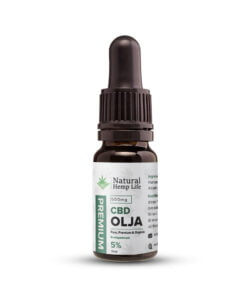 CBD Oil 5% (500mg)
1 × 14 €
CBD Oil 5% (500mg)
1 × 14 €

14
May
May
Senest opdateret: June 2026

Stress, anxiety and low mood are extremely common – and often long-lasting – challenges that can shape your everyday life, relationships and physical energy.
They tend to appear together in patterns where sleep, focus, motivation and mood are all affected at the same time, and where the body feels “switched on”
long after the day should have ended.
Many people describe difficulty winding down, broken sleep and racing thoughts that continue far into the night. According to the
World Health Organization (WHO)
, hundreds of millions of people worldwide live with anxiety disorders, and
depression is one of the leading causes of disability
.
That gives a sense of how widespread psychological strain has become in modern life.
At the same time, interest in self-care has grown rapidly. More and more people are building routines around food, sleep, movement, therapy, mindfulness –
and sometimes supplements such as CBD oil. CBD is often discussed in situations where people want to support everyday balance,
calm the nervous system and create small, conscious “micro-pauses” in an otherwise intense life.
In this guide we look at how CBD is typically discussed in relation to stress, worry and low mood, how it connects to the body’s endocannabinoid system (ECS),
and how all of this fits into a broader picture of evidence-based self-care and professional support. The goal is a hopeful but honest overview –
so you can better understand why so many people in Europe and beyond have become curious about CBD.
Fact box: CBD, stress and mental wellbeing
- CBD: A non-intoxicating cannabinoid from hemp that does not cause a “high”.
It is used in supplements by people who want to explore the potential of hemp plant compounds. - Use: Often taken during periods of high pressure, busy thoughts, sleep difficulties or a general feeling of imbalance in everyday life.
- Safety: Reviews of clinical data suggest CBD generally has a
favourable safety profile at typical doses, though sensitivity, side effects and interactions
can differ between individuals. See e.g.
“An Update on Safety and Side Effects of Cannabidiol”
and the WHO
critical review report on CBD
. - Common forms: CBD oil, capsules and topical products such as creams or balms.
- Whole picture: When CBD is used, it is usually alongside other tools:
good sleep habits, stress management, physical activity, therapy and, when needed, professional treatment.
CBD oil & stress – how is it often described?
The stress response is protective by design – it helps us perform when we need to.
But when stress becomes long-term, it leaves deep marks on both body and mind.
Many people recognise difficulties relaxing, racing heart, stomach tension, tight muscles, problems focusing and sleep that never really feels restorative.
CBD in the discussion about stress and everyday worry
In research, CBD has been studied in relation to the body’s
endocannabinoid system (ECS)
.
The ECS is a wide signalling network found throughout the body and brain, and is involved in how we regulate stress, mood, sleep and resilience.
The ECS interacts with the nervous system, immune system, gut, hormone systems and our overall adaptation to inner and outer demands.
In scientific studies, cannabinoids have been shown to influence this system in different ways.
That is why CBD attracts so much interest in contexts where stress regulation, recovery and emotional balance are central.
In everyday life, many people place their CBD routine in the morning or evening – often together with other calming habits such as herbal tea, a book,
journaling or a few minutes of breathing exercises. In that way, the ritual around taking CBD becomes a clear marker:
“Now it’s time to slow down”, regardless of which other strategies you use to manage stress.
Our products
-50%
Original price was: 27 €.14 €Current price is: 14 €.
-50%
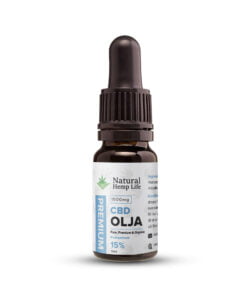
Original price was: 73 €.37 €Current price is: 37 €.
-50%
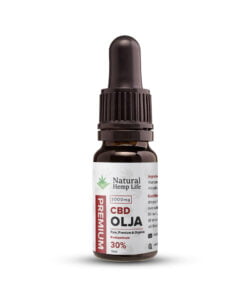
Original price was: 99 €.50 €Current price is: 50 €.
-50%

Original price was: 55 €.28 €Current price is: 28 €.
-50%
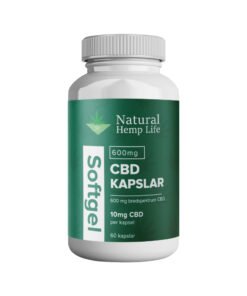
Original price was: 50 €.25 €Current price is: 25 €.
-50%
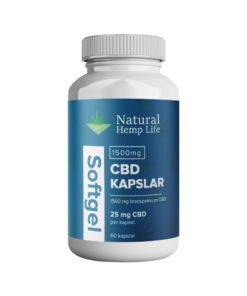
Original price was: 91 €.46 €Current price is: 46 €.
CBD and anxiety – a growing field of interest
Anxiety can feel like an inner engine that never switches off – from a low-level sense of unease to intense panic reactions that affect work, relationships and sleep.
The body goes into high alert even when everything looks calm on the outside.
In research, CBD has been studied in relation to signalling systems involved in emotion regulation – including the ECS and receptors linked to mood and stress response.
A well-known review by Blessing et al. (2015) summarised preclinical and human data and concluded that CBD shows
anxiolytic (anxiety-reducing) potential in several models of anxiety, while emphasising the need for more long-term clinical trials:
“Cannabidiol as a Potential Treatment for Anxiety Disorders”
.
In one small but frequently cited human study, people with social anxiety disorder who received a single dose of CBD experienced reduced anxiety
during a stressful public speaking test compared with placebo:
Bergamaschi et al., 2011 – “Cannabidiol Reduces the Anxiety Induced by Simulated Public Speaking”
.
Later preclinical work (for example Melas et al., 2021) also supports an anxiolytic- and antidepressant-like profile for CBD in animal models.
These findings do not mean CBD is an approved medicine for anxiety in Europe. But they help explain why many people with stress- and anxiety-related
difficulties feel that CBD gives them a softer baseline – especially in the evenings – and why it is being explored so actively by researchers.
In practical daily life, many people connect their CBD use to moments already set aside for recovery – such as mindfulness, slow breathing, a quiet walk or evening routines.
CBD then becomes part of a structure where you deliberately create time to pause, feel into your body and “check in” with yourself, instead of just pushing through.
What can lie behind anxiety problems?
Anxiety is part of the body’s built-in protection system. But when it is activated too often or too strongly, life can start to shrink.
Underlying factors are usually a combination of long-term stress, unresolved experiences or trauma, biological vulnerability, sleep problems, hormonal changes
and demanding life situations.
Within this bigger picture, CBD is sometimes discussed as a complementary tool – not as a cure.
The core of moving forward almost always lies in measures that target the causes:
therapy, structured stress management, changes in workload or boundaries, social support and, where needed, medication prescribed in collaboration with healthcare professionals.
Different types of anxiety disorders
Recognising patterns can make it easier to seek help – but diagnosis and treatment are always the responsibility of healthcare,
not supplements.
| Type of anxiety | Short description | Example symptoms |
|---|---|---|
| GAD (generalised anxiety) | Long-lasting, hard-to-control worry across many areas of life. | Restlessness, muscle tension, sleep problems. |
| Panic disorder | Recurring panic attacks without obvious external danger. | Heart palpitations, shortness of breath, feelings of unreality. |
| Social anxiety | Fear of social situations or of being the centre of attention. | Blushing, racing heart, avoidance of social events. |
| OCD | Obsessions and compulsions used to reduce anxiety. | Checking, repetitive rituals, intrusive thoughts. |
| PTSD | Anxiety and intrusive memories after trauma. | Flashbacks, nightmares, strong hypervigilance. |
| Complex PTSD | Long-term, often repeated traumatic exposure. | Emotional dysregulation, shame, identity difficulties. |
| Specific phobias | Clear, focused fear – e.g. of heights, flying or animals. | Avoidance, strong anxiety when facing the feared situation. |
If you recognise yourself in any of this, the most important step is to talk to a healthcare professional.
If CBD becomes part of your life, it should be as a separate supplement alongside professional treatment – never instead of it.
Factors that often contribute to stress and anxiety
There is almost never just one cause. Common examples include:
- Long-term load: work pressure, conflicts, caring responsibilities or financial worries.
- Sleep problems: months or years of poor sleep increase emotional sensitivity and stress reactivity.
- Hormonal changes: for example PMS, pregnancy, postpartum period or menopause.
- Lifestyle factors: high caffeine intake, frequent alcohol, sedentary habits or irregular routines.
- Biological vulnerability: family history or imbalances in neurotransmitters can play a role.
Within this bigger picture, some people choose to let CBD oil or capsules become part of their daily routine – often as a recurring element in connection
with winding down, reflection or preparing for sleep.
That can make it easier to build a clear ritual around recovery, while still working on the deeper drivers behind the stress.
What to look for in CBD products
If you decide – sometimes alongside medical support – to explore CBD, product quality is a key part of feeling safe with your choice:
- THC-free or compliant levels:
In many European countries, CBD products must have no detectable THC or only trace levels within legal limits.
Always check the rules in your country and choose products that clearly follow them. - Third-party testing:
Ask for independent lab reports showing cannabinoid profile, heavy metals, pesticides and microbiology. - Full-spectrum, broad-spectrum or isolate:
The choice is about desired plant profile and personal sensitivity – there is no one version that is “best” for everyone. - Oil or capsules:
Oils make it easy to adjust dose gradually. Capsules give a fixed mg amount per serving and can be convenient in daily life. - Transparency:
Serious brands openly share origin, manufacturing methods and lab reports so you can review the product yourself.
CBD and depression – how to relate to the research
Depressive symptoms can involve low energy, loss of interest, difficulties starting tasks and sometimes a heavy sense of hopelessness.
Causes are usually a mix of biological, psychological and social factors.
Preclinical studies have examined how CBD affects brain systems linked to mood, including the ECS and neurotransmitters involved in emotional regulation.
Reviews such as
Melas et al., 2021 – “Cannabidiol as a Potential Treatment for Anxiety and Mood Disorders”
describe CBD as having antidepressant-like and anxiolytic effects in animal models. But this does not automatically translate into approved treatments for humans.
For depression, professional support is always central. Core treatment often includes therapy, structured routines, social support, sometimes medication
and close follow-up by healthcare.
If CBD is present in the background, it is usually as a separate supplement: starting low, observing your own experience carefully and keeping an open dialogue
with your doctor when needed.
CBD and cortisol – one line of research among many
Cortisol is one of the body’s central stress hormones.
Short peaks help us perform when needed, but chronically elevated levels are often linked to fatigue, poorer recovery and the feeling of never really coming back into balance.
Some studies have examined the relationship between CBD, cortisol and stress responses.
This is one of several lines of research trying to understand how the ECS interacts with hormone systems and the body’s way of handling long-term load.
In practice, however, the real foundation of stress management is still built from the basics: sleep, recovery, boundaries, movement, relationships and support.
CBD and self-care – a possible, but not necessary, piece of the puzzle
When people describe how they use CBD in daily life, it is often as one part of a broader self-care strategy.
CBD oil can become one element in a routine where you already prioritise recovery and actively try to bring more balance into your life.
- Regular contact with healthcare for long-lasting or severe symptoms.
- Therapy or counselling, e.g. CBT, ACT or other structured treatments.
- Sleep routines: fixed bedtimes and wake times, screen-free wind-down, calm environment.
- Physical activity adapted to your energy – from short walks to gentle strength training or yoga.
- Intentional recovery: micro-breaks, breathing exercises, saying no to overload where possible.
If you want to try CBD oil in your own routine, a simple approach is to start with a low dose, keep your other habits as stable as possible for a few weeks
and make short notes about sleep, energy and perceived stress level.
This makes it easier to see whether you actually like the effect or if you would rather focus on other areas of your self-care.
Summary – a grounded way to look at CBD in mental strain
Stress, anxiety and depression are common – and demanding – conditions.
It is completely natural to want tools that create more room for recovery and hope, but that also means the amount of advice and products can quickly feel overwhelming.
CBD is not a shortcut or a cure. It is a supplement that many people in Europe choose to explore as part of their lifestyle.
Interest centres on how it interacts with the endocannabinoid system and how it may fit into routines for sleep, winding down and mental reset –
alongside more established measures.
With recurring or worsening mental health problems, it is always more important to seek help from healthcare than to only adjust supplements.
In an acute crisis – especially if you have thoughts of harming yourself or not wanting to live – it is an emergency:
contact your local emergency number or psychiatric emergency services immediately.
 CBD Oil 5% (500mg)


